You might not even know you are doing it. Teeth grinding, or bruxism, often happens while you sleep, leaving behind a trail of worn enamel, tender jaw muscles, and dull morning headaches before you ever open your eyes. Over time, the cumulative damage can be surprisingly significant, but a well-fitted night guard is one of the most effective tools available to stop it in its tracks.
At Maple Glen Modern Dentistry in Ambler, PA, Dr. Adam Rudin takes a thorough approach to identifying and addressing bruxism before it costs patients more than just a good night’s sleep. As a general dentistry service, custom night guards are part of how we help patients protect the investment they have made in their teeth, whether that is their natural enamel or existing dental work. If you have been waking up with jaw soreness or your partner has mentioned hearing grinding sounds at night, this is worth taking seriously.
What Bruxism Does to Your Teeth
Bruxism is more common than most people realize. According to research published by the National Center for Biotechnology Information, sleep bruxism affects between 8% and 10% of adults, while wake bruxism affects anywhere from 22% to 31% of the population. That is a significant portion of people quietly grinding away at their enamel with no immediate awareness of the damage being done.
The consequences add up quickly. Enamel does not regenerate. Once it is worn down, the teeth underneath become more sensitive, more vulnerable to decay, and more prone to fracture. Patients with long-term untreated bruxism often end up needing crowns, fillings, or other restorative work to address damage that was entirely preventable. For anyone with existing restorations, the stakes are even higher: grinding exerts enough force to crack porcelain crowns, dislodge veneers, and put stress on the supporting structures around dental implants. Getting dental implant treatment is a significant commitment, and protecting those restorations matters.
Why Custom Matters
A store-bought night guard and a custom-fitted night guard are not really the same product. The fit is the difference, and the fit determines everything.
Over-the-counter guards are made in bulk to approximate an average mouth. They tend to be bulky, uncomfortable, and because they do not sit precisely against the teeth, they can shift during the night or require constant biting pressure to stay in place. Some patients find them so disruptive that they simply stop wearing them.
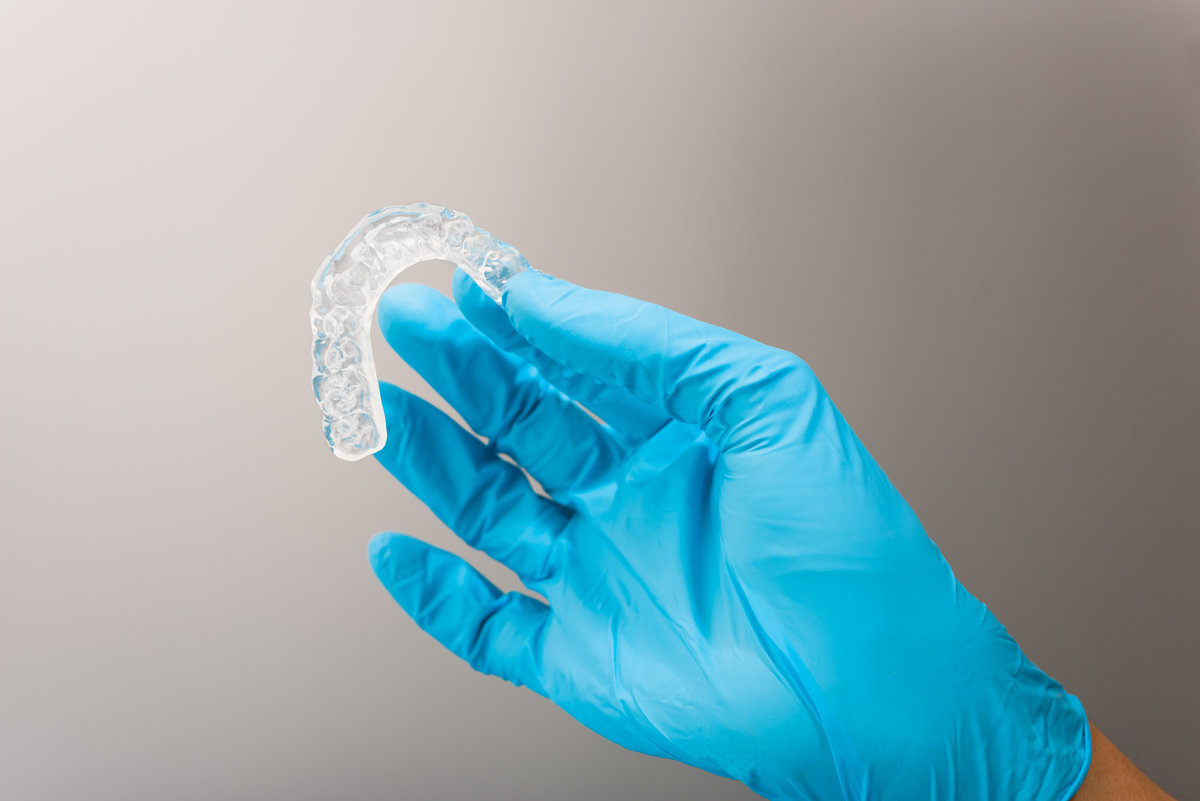
A custom night guard is fabricated from a precise model of your teeth. At Maple Glen Modern Dentistry, we take digital impressions of your upper and lower arches, eliminating the need for traditional tray impressions and producing a more accurate model. The resulting guard fits flush against your teeth, stays securely in place throughout the night, and distributes occlusal forces evenly across the biting surface. Patients who switch from over-the-counter guards to custom versions almost universally report that they actually wear them, which is the only way any guard delivers results.
The Connection to TMJ and Jaw Health
Bruxism and jaw joint problems frequently go hand in hand. The repeated clenching and grinding that characterizes bruxism places constant stress on the temporomandibular joint, which connects the lower jaw to the skull. Over time, that stress can contribute to or worsen TMJ disorder, causing popping and clicking in the jaw, limited range of motion, facial pain, and earaches that seem unrelated to any ear problem.
Dr. Rudin completed the Dawson Academy Core Curriculum with a specific focus on TMJ and occlusal therapy, which means he looks at bruxism through a broader clinical lens than just protecting enamel. For patients whose grinding has already begun to affect their jaw joint, TMJ treatment may be part of a more comprehensive care plan. A night guard addresses the mechanical damage; addressing the underlying bite and joint function addresses the root of the problem.
Signs You Might Need a Night Guard
Many patients are surprised to learn they grind at night because they have simply normalized the symptoms over time. Here are a few signs worth bringing up at your next appointment:
- Flattened or worn teeth: The biting edges look shorter or more uniform than they should
- Increased sensitivity: Teeth that react to cold, heat, or sweets more than before
- Morning jaw pain or fatigue: A tight, tired feeling when you wake up
- Headaches: Especially tension-type headaches that start at the temples
- Cracked or chipped teeth: Fractures with no clear explanation
If any of these sound familiar, a conversation with Dr. Rudin during your general dentistry exam is a logical first step. He can assess wear patterns, evaluate your bite, and determine whether a custom night guard is the right fit for your situation.
Get the Protection Your Teeth Deserve at Maple Glen Modern Dentistry
Bruxism tends to worsen without intervention, and the damage it leaves behind rarely stays minor forever. Dr. Rudin brings over a decade of clinical experience, advanced training at NYU, and a genuine interest in conservative care to every patient evaluation. Our goal is always to preserve what is already working before recommending anything more involved.
Dr. Rudin and the team at Maple Glen Modern Dentistry serve patients throughout Ambler, Fort Washington, Horsham, Willow Grove, Maple Glen, Lower Gwynedd, and Upper Dublin Township. To find out whether a custom night guard is right for you, request an appointment today.