
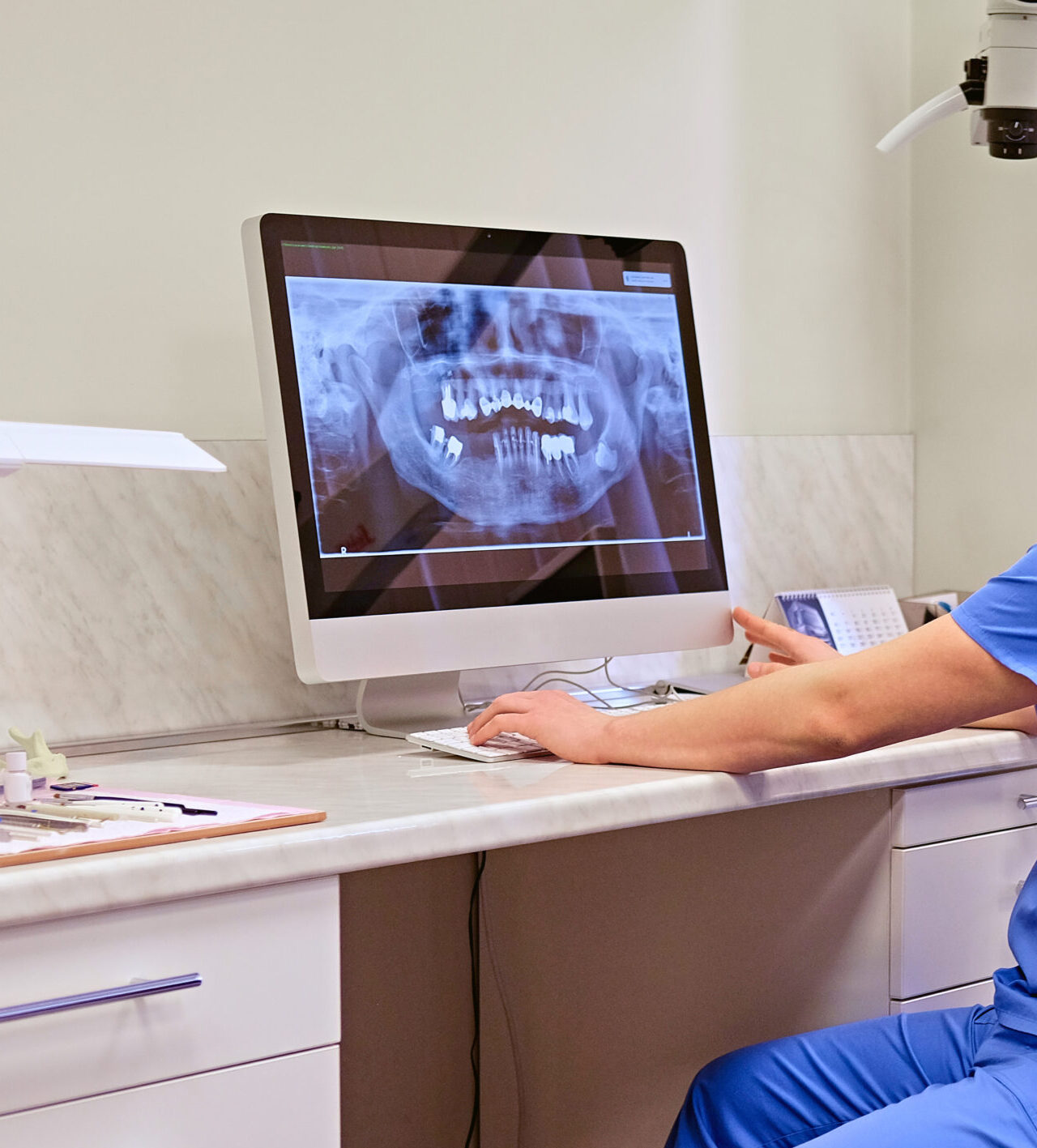
Most people expect dental implant surgery to feel like a leap of faith; you show up, sit back, and hope everything lands in the right place. But modern dentistry has changed the equation entirely. Today, technology plays an active role in guiding every step of the process, from the first scan to the final placement. If you’ve heard the term “computer-guided implant surgery” and wondered what it actually means for you, you’re in the right place.
At Maple Glen Modern Dentistry in Ambler, PA, Dr. Adam Rudin uses computer-guided techniques to deliver greater precision in dental implant procedures. This approach combines advanced 3D imaging, digital planning software, and custom surgical guides to improve implant placement accuracy, predictability, and comfort for patients.
How Computer-Guided Surgery Works
The process begins well before you ever sit in the dental chair. Using cone-beam computed tomography (CBCT), a 3D imaging scan provides a detailed view of your jawbone, nerves, and surrounding structures. This gives Dr. Rudin a complete picture of your oral anatomy, so there are no surprises during surgery. The data from that scan is then loaded into implant planning software, where the exact position, angle, and depth of each implant can be mapped out virtually.
Once the digital plan is finalized, a custom surgical guide is created. This guide fits over your teeth or gums during the procedure and physically directs the drill to the precise location determined during planning. Think of it as a GPS-mapped blueprint for your surgery. The result is a procedure that follows a carefully predetermined path rather than relying solely on real-time judgment.
Static vs. Dynamic Guidance
There are two main types of computer-guided implant surgery: static and dynamic. Static guidance uses a pre-made physical guide created from your 3D scan. The guide is fabricated ahead of time and used during surgery to direct the drill and implant to the correct position. Dynamic navigation, on the other hand, works more like live GPS, using real-time tracking to guide placement as the procedure unfolds.
Both methods have been shown to improve placement accuracy compared to freehand techniques. A 2023 systematic review published on PubMed found that computer-guided implant surgery can achieve a distance deviation of less than 1 millimeter from the planned position, a level of precision that is difficult to match with freehand techniques.
Benefits for Patients
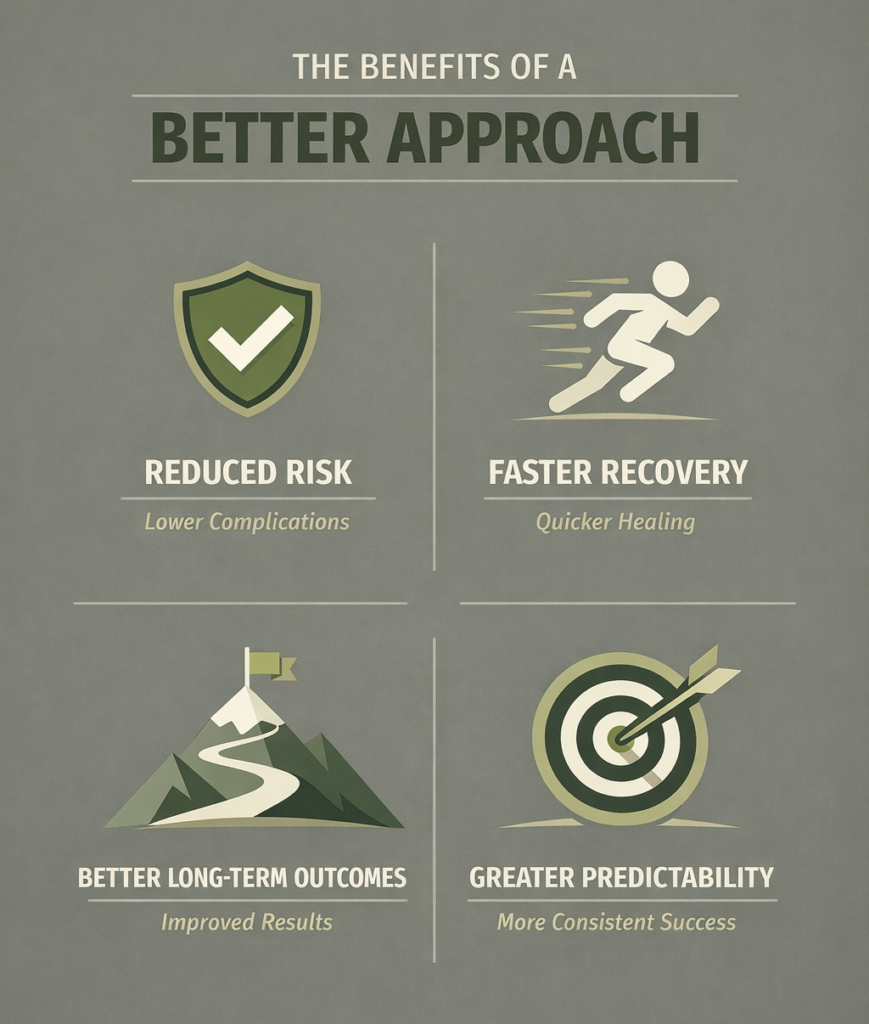
Computer-guided surgery offers a range of advantages that go well beyond accuracy, touching nearly every aspect of the patient experience. Here is what this approach may mean for you:
- Reduced risk: Because the procedure is planned digitally in advance, the surgeon can identify and avoid nerves, blood vessels, and other sensitive areas with much greater confidence, leading to a safer procedure overall.
- Faster recovery: Computer-guided surgery often allows for a minimally invasive, flapless approach, meaning less gum tissue disruption, less swelling, and a quicker return to normal activity.
- Better long-term outcomes: When an implant is placed at the correct angle and depth, it integrates more effectively with the surrounding bone and supports a well-fitting restoration.
- Greater predictability: Patients and providers can review the digital plan together before surgery begins, reducing unknowns and providing a clearer picture of what to expect.
At Maple Glen Modern Dentistry, we pair this technology with our in-house CBCT imaging and advanced dental technology to ensure every stage of your care meets a high standard.
Who Is a Candidate?
Computer-guided implant surgery is not limited to simple cases. In fact, it is especially helpful for patients with limited bone volume, complex anatomy, or multiple missing teeth. Pre-surgical planning allows our team to assess bone quality and quantity ahead of time, and, in some cases, a bone graft may be recommended before implant placement to ensure a stable foundation.
Patients who experience dental anxiety may also find this approach reassuring. Knowing the plan has been digitally mapped and reviewed in detail before the procedure begins can make a significant difference in how comfortable and confident you feel as you walk in. Our focus on an anxiety-free experience, combined with the added predictability of guided surgery, means you can trust the process from start to finish. As part of our commitment to comprehensive restorative care, we take the time to walk every patient through their treatment plan before any work begins.
Take the Guesswork Out of Dental Implants at Maple Glen Modern Dentistry
Dr. Adam Rudin and the team at Maple Glen Modern Dentistry are committed to providing forward-thinking care in a welcoming, modern environment. Whether you are exploring implants for the first time or have been told you are not a candidate elsewhere, we encourage you to come in for a conversation.
We offer free consultations and free second opinions, so there is no pressure and no commitment required to get started. If you are ready to take the next step, schedule your appointment online today and find out whether computer-guided implant surgery is the right fit for you.